


What a car leather sealant protects and what it doesn't
Daniel von Detailing1 |


ZviZZer
Sprühwachs aus Wachs und Versiegelung für schnellen Glanz und Schutz
ZviZZer
Synthetisches Hartwachs mit langer Standzeit und Abperleffekt

SONAX
PROFILINE SpeedProtect Spray Sealant
Vehicle care


Meguiars
GOLD CLASS Carnauba Plus Premium Liquid Car Wax Sealant
Car wax for a perfect finish

Meguiars
BRILLIANT SOLUTIONS New Car Kit Care Set
Wash & Wax, Liquid Wax & Tire Gel — New Car Initial Care


GYEON
Hybrid Carnauba Wax – warm wax shine with modern durability


Dr. Wack "S100"
"S100" Matte Wax Spray for Motorcycles (Matte)
Long-lasting matte finish protection for matte motorcycle surfaces
Dr. Wack "A1"
A1 "Speed Wax Plus 3" Spray Wax
Carnauba hard wax for as-new paint — flash off, buff off
ZviZZer
Wax "Graphene" Graphene Wax / Wax Sealant
Graphenverstärktes Hand-Hartwachs mit bis zu 12 Monaten Standzeit

SONAX
Flüssiges Carnauba-Hartwachs für Hochglanz und Witterungsschutz
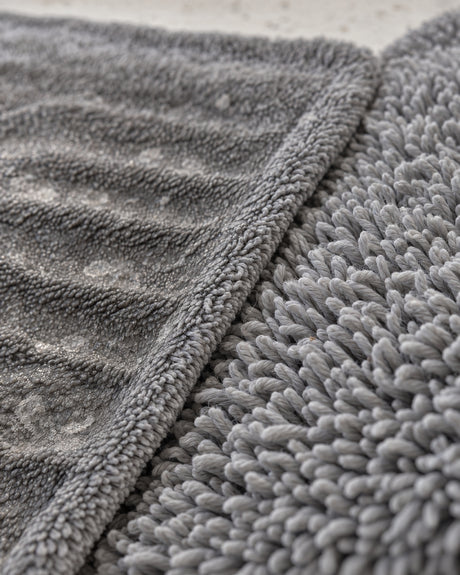
A short pile towel picks up the rest without smearing.
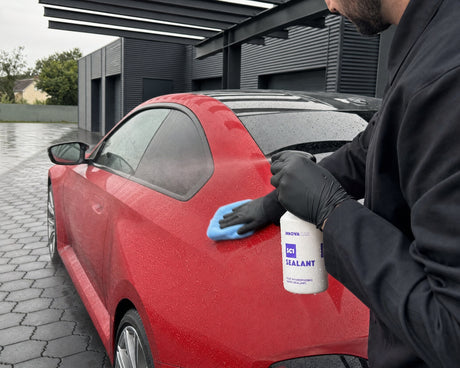
Message us on WhatsApp and we will find the right protection for your car.
What does car wax do? It lays a soft wax film over the clear coat that bends light differently from a ceramic layer, making the colour look deeper. In return you get weeks to months rather than years. At Detailing1 you'll find carnauba pastes, liquid waxes and hybrids with a ceramic content.
Wax sealant is a protective layer of natural or synthetic waxes that you apply to the cleaned clear coat, let flash off and buff away again. What stays behind is a thin, closed film that makes water bead and gives the paint a warm, rich look. Classic carnauba comes from the leaves of a Brazilian palm, synthetic waxes are made of polymer chains, and hybrids combine both with ceramic components.
Detailing1's tip from the shop: We often get questions about wax that barely buffs off and leaves greasy smears. The cause is almost always the same: too much product on the applicator. Wax only protects with the layer of molecules actually touching the paint; everything on top is dead weight you'll have a hard time buffing off afterwards. Use so little paste that the applicator is just tinted, and work one panel at a time. If you can still see streaks of wax after applying, it was too much. A cleanly applied thin film lasts just as long and comes off in one wipe.
Wax doesn't change the colour of your car. It changes the path light takes to the pigment and back.
Clear coat is never perfectly smooth. Under the microscope it shows a fine landscape of hills from the drying process, plus wash marks and weathering. At every one of those edges, light scatters in a random direction instead of being reflected back cleanly. That scattered light is exactly what sits over the colour as a milky haze.
The wax film settles into that texture and levels it out. In plain terms: the surface becomes optically smoother without you having removed any paint. Less scatter means more directed reflection, and more directed reflection means rich, dark colour with a crisp mirror image instead of a dull grey haze.
Carnauba adds its own touch on top. The natural wax forms a slightly thicker, softer film than a polymer and bends light differently from the clear coat underneath. The scene describes the effect as a warm, wet look, and the term nails it. You'll see it far better under low evening light than in the midday sun.
What wax can't do belongs right here too. It doesn't fill swirls or scratches. A pasty carnauba will hide fine holograms for a few weeks, then they come back as the wax wears off. If you want real depth, polish first and wax afterwards. Everything on the prep side is under Polishing.
Beading is part of it, but it isn't proof of protection. Fresh wax films pull water into round beads, which the scene calls beading. What we see day-to-day: the visual effect often fades while the protection is still there. Trust the calendar rather than the shape of the droplets.
Three wax families share this category. They differ in durability, looks and how much patience the application demands.
Carnauba is the natural product. It comes from the leaves of the Brazilian palm Copernicia prunifera, which sweats it out as protection against evaporation, and with a melting point around 83 degrees it's the hardest natural wax there is. On its own you couldn't apply it at all, which is why it always comes in a blend of oils and solvents. Rule of thumb: the content in the tin decides the depth, the carriers decide how easy it is to work with. Typical examples are the Koch-Chemie Hand Wax „W0.01" Carnauba Wax Sealant, the Meguiars GOLD CLASS Carnauba Plus Premium Paste Wax and the D-CON Vanilla-Carnauba-Cream-Wax Carnauba Wax.
Synthetic waxes work with long artificial molecule chains that lie flat against the paint surface and crosslink with each other. Picture a fine-meshed plastic net stretched over the clear coat instead of a blanket of wax lying on top. In practice that means more resistance to shampoo and UV, but a crisper, cooler look without the warmth of carnauba. The ZviZZer Wax „Synthetic" Synthetic Wax represents this group, and the Soft99 Fusso Coat 12 Months Wax Light Paint Sealant, with its fluorine-based building blocks, its top end.
Hybrids blend both worlds and add silicon dioxide or graphene, the hard building blocks from the ceramic world. They combine the longer durability of synthetics with ease of application that's closer to wax than to a coating. In everyday terms: no panel wipe, no curing time, yet a few more months of peace. The Meguiars Hybrid Ceramic Liquid Wax Sealant and the ZviZZer Wax „Graphene" Graphen-Wachs stand for this group.
Cutting across the three families is the format. Pastes need an applicator, give you the finest control over how much goes on and are the tool for a relaxed afternoon. Creams and liquid waxes like the Meguiars Ultimate Liquid Wax Paint Sealant spread faster and are more forgiving. Spray waxes are the quickest and the thinnest.
One type of its own runs straight through the wash. The Koch-Chemie Protector-Wax „Pw" Preservation Wax is diluted at around 30 millilitres per litre of water, applied to the wet car and rinsed off again. It builds up a thin rinse-off sealant with every wash instead of needing one thick layer in one go. If you wash a lot, that's the easiest route to long-lasting beading.
A ceramic coating lasts longer. A wax often looks better in the first few weeks. Both are true at the same time, and the whole decision hinges on that.
Numbers first. A pure carnauba manages four to eight weeks in everyday use, a synthetic wax three to six months, a hybrid with ceramic content half a year and more. Long-life waxes like Fusso Coat are rated by the manufacturer at up to twelve months. A ceramic-based Lacquer sealing can, according to the manufacturer and depending on the coating, last up to five years with maintenance as they specify.
The reason lies in how it bonds. Wax sits physically on the paint, held by weak attractive forces between the molecules. A ceramic coating, on the other hand, crosslinks chemically into a network of silicon and oxygen that's practically part of the surface once cured. For you, that means shampoo, rain and UV wear one of them down a little with every wash and leave the other largely unmoved.
Wax still wins on three points. It forgives application mistakes, because you simply wipe off a botched spot and redo it. It doesn't need a perfectly degreased surface or twelve hours of curing in a dry environment. And it costs a fraction, which lets you experiment.
We often see that frequency gives you the answer. If you're out with the car every few weeks because you enjoy it, you'll get more out of wax than from a coating that stubbornly does the same thing for two years. If you're after a longer-lasting protective layer and plan in regular maintenance as the manufacturer specifies, ceramic is the right call. In between, Spray sealants are the practical compromise.
And combining them isn't a contradiction. A ceramic coating as the base with a wax or a Quick Detailer on top as a topper every few months brings together the durability of one and the looks of the other. Just hold back straight after the coating and give the layer its curing time before anything goes on top.
Three steps, and the first decides how much effort the other two take. Too much wax is the most common mistake in this category.
The amount is smaller than most people think. An applicator that's just tinted covers half a bonnet. Protection only comes where wax molecules actually touch the paint; every extra layer on top sits loose and gets removed anyway when you buff. In practice: you save product and half the work.
Apply in overlapping straight lines, panel by panel. Circular motions spread it fast, but leave a pattern that later shows up as haze under raking light.
Flashing off means the solvents evaporate and the wax turns matt, known in the scene as hazing. Depending on the product and humidity that takes five to fifteen minutes. The test for it is the finger swipe. Run a finger over a corner of the panel. If the wax wipes off cleanly and the paint underneath is clear, it's time. If it smears, keep waiting.
Buff off with two towels. The first picks up the bulk, the second buffs and takes the rest. Flip the towel sides often; a saturated towel just moves wax around. Then go over each panel once at a low angle and look for high spots, the matt islands where more wax sat than elsewhere. A dry towel sorts them out in seconds.
Finally, curing. Twelve to twenty-four hours without a wash and ideally without rain, then the film has set. A second layer adds hardly any extra durability, but a little more depth, and it goes on the next day at the earliest. The first time you'll need around two hours for a car. By the fifth time it's one.
No product in this category is independent of the weather. Temperature, humidity and the condition of the paint decide whether the afternoon is relaxed or turns into a slog.
The panel has to be cool to the touch and in the shade. On a sun-baked bonnet the solvents evaporate instantly, the wax hardens instead of flashing off evenly, and then sticks. You'll work most comfortably at an ambient temperature between ten and twenty-five degrees.
Cold does the opposite. Below ten degrees a paste gets stiff, is hard to get out of the tin and spreads unevenly, because the carrier oils stop flowing. In that case, keep the product in a warm room and apply even thinner than usual. Expect much longer flash times; a finger-swipe test saves you the guesswork here.
High humidity also stretches the flash-off phase, because the solvent escapes more slowly into saturated air. A damp autumn evening can turn ten minutes into twenty. Not a product fault, you just plan more time.
The surface is the second lever. Wax only bonds to a clean, residue-free surface. First comes decontamination of iron fallout and tree sap, then polishing if needed, and after that a panel wipe to remove the oils from the polish. Wax on polishing oils looks fantastic in the evening and is gone after the first wash. The full prep stage is under Polishing.
Two limits to finish that we often clear up. Freshly painted panels have to outgas, and painters usually quote four to eight weeks for that; no wax goes on before then. And unpainted black plastic and rubber seals stay off-limits, because they're left with white wax edges that are a pain to get out again. A strip of masking tape on the trim takes two minutes and saves half an hour.
Three questions lead to the answer: how often do you want to get stuck in, what colour is your paint, and how much time do you give one session.
Dark paint and enjoying the work point to a carnauba paste. The Meguiars GOLD CLASS Carnauba Plus Premium Paste Wax is the classic way in with very forgiving application, the Koch-Chemie Hand Wax „W0.01" Carnauba Wax Sealant the choice for anyone who already knows what they're doing. If the scent is part of the ritual for you, grab the D-CON Vanilla-Carnauba-Cream-Wax Carnauba Wax.
If you do a thorough job once a year and then want peace, durability is the deciding factor. The Soft99 Fusso Coat 12 Months Wax Light Paint Sealant is built for that, and its light version covers silver, white and all pastel shades. Application takes care and a genuinely clean surface, but you carry the result right through the winter.
For your very first try, go for something liquid. The Meguiars Ultimate Liquid Wax Paint Sealant practically spreads itself and forgives a spot left two minutes too long. If you want more durability straight away, the Meguiars Hybrid Ceramic Liquid Wax Sealant is the logical next step, and the ZviZZer Wax „Graphene" Graphen-Wachs the most technically advanced take on it.
If you wash regularly and can't be bothered with a separate waxing session, tie the protection to the wash. The Koch-Chemie Protector-Wax „Pw" Preservation Wax goes on with the rinse and builds the layer up over the weeks. For a quick top-up in between, Spray sealants and Quick Detailer remain the better-suited tools.
Motorbikes have their own rules, because painted surfaces, chrome and plastic sit tightly side by side and nobody tapes off every edge. The Dr. Wack „S100" Motorrad Schnellwachs is designed for exactly that and comes straight off without a long flash-off phase. For everything on the car that goes beyond wax, the way leads back to Lacquer sealing.
Too much choice in Wax sealant? Get help picking:
Daniel von Detailing1 |

Daniel von Detailing1 |

Jasper von Detailing1 |

Daniel von Detailing1 |

Daniel von Detailing1 |

Daniel von Detailing1 |

Jasper von Detailing1 |

Jasper von Detailing1 |

Daniel von Detailing1 |

Daniel von Detailing1 |

Daniel von Detailing1 |

Daniel von Detailing1 |


