




What a car leather sealant protects and what it doesn't
Daniel von Detailing1 |


Koch-Chemie × COLOURLOCK
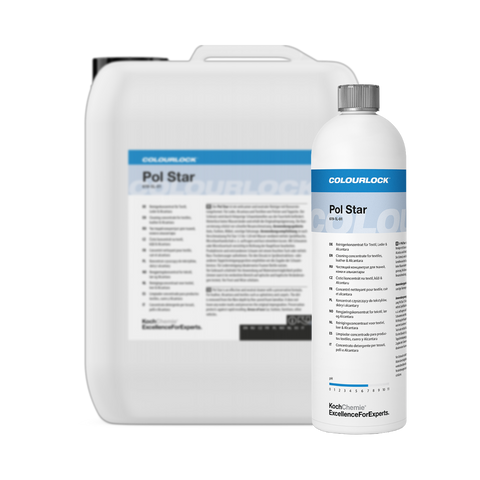
COLOURLOCK "Pol Star" cleaner concentrate for fabric, leather & Alcantara
pH-neutrales Reinigerkonzentrat für Textil, Alcantara und Glattleder
Koch-Chemie × COLOURLOCK
COLOURLOCK "Fresh Up" Odour Neutraliser with Fresh Scent
Fresh and effective odor neutralizer for interiors and leather
Koch-Chemie × COLOURLOCK
COLOURLOCK "Leather Cleaner" (Mild) — cleaner for normally soiled pigmented smooth leather
Gentle daily leather cleaning and care
Koch-Chemie × COLOURLOCK
COLOURLOCK "Degreaser" Solvent-Free Leather Degreaser for Surface Prep on All Leather Types
Solvent-free degreaser for optimal leather repair preparation
Koch-Chemie × COLOURLOCK
COLOURLOCK "Leather Cleaner" (Strong) cleaner for heavily soiled, surface-pigmented smooth leather
Powerful intensive cleaning for heavily soiled leather
Koch-Chemie × COLOURLOCK
COLOURLOCK "Aniline & Nubuck Cleaner" Gentle cleaner for all open-pore smooth leathers and nubuck
Gentle cleaning and safe deep conditioning for aniline and nubuck
Koch-Chemie × COLOURLOCK
COLOURLOCK "Sek-Off" Remover for Superglue Residue
Superglue Remover for Leather and Plastic
Koch-Chemie × COLOURLOCK
COLOURLOCK "Leather Fixative" colour fixative that stops dye bleeding when you wash leather
Color Fixative for Washable Leather – reliable colorfastness
Koch-Chemie × COLOURLOCK
COLOURLOCK "Grease Absorber Paste" — absorber for treating greasy areas on leather
Remove grease stains from leather
Koch-Chemie × COLOURLOCK
COLOURLOCK "Leather & Fur Wash Concentrate" wash concentrate for leather and fur
Professionelles Waschkonzentrat für Schonwäsche für Leder und Fell
Koch-Chemie × COLOURLOCK
COLOURLOCK "Shoe Cleaner" cleaner for all shoe and boot types
Effective, gentle deep cleaning for leather shoes
Koch-Chemie × COLOURLOCK
COLOURLOCK "Sneaker Cleaner" For gentle cleaning of sneakers and sports shoes
Effective, gentle deep cleaning for leather shoes
What is Cleaning by COLOURLOCK? The cleaning line from the leather specialist within the Koch-Chemie group: leather cleaners in two strengths, a cleaner for aniline and nubuck, a concentrate for upholstery and Alcantara, shoe cleaners, leather detergent and specialist removers for dye transfer, grease and glue — the first step of any leather refurb.
Cleaning by COLOURLOCK is where every leather refurb starts — the step that decides everything that follows, from conditioning to re-dyeing. COLOURLOCK was founded in 1995 at the Lederzentrum in Rosdorf near Göttingen and has been part of Koch-Chemie from Unna since 2023. The cleaning line is split by job: mild and strong leather cleaners for pigmented smooth leather, a dedicated cleaner for open-pored aniline and nubuck, a concentrate for upholstery and Alcantara, detergent for leather clothing and specialist removers for the cases where normal cleaners give up.
Detailing1's tip from the shop: The most common mistake in leather cleaning is too much water with too much pressure. Put the cleaner straight onto the seat and scrub, and you drive moisture into seams and seat foam — open-pored leather is left with dark water rings, and the thread swells at the seam. Better: put the cleaner on a sponge or soft brush, work with the foam, lift the loosened dirt with a microfibre towel that's barely damp and let the surface dry before conditioner or sealant goes on. And leave ox-gall soap and washing-up liquid in the kitchen: thanks to tanning, leather sits slightly acidic at around pH 5, while both household remedies are alkaline — they strip the fats out of the leather and leave it harder than before.
Before a refinisher re-dyes a scuffed seat bolster, they clean and degrease it — otherwise no colour will hold. That's exactly where this category comes from: COLOURLOCK started in 1995 as the brand of the Lederzentrum in Rosdorf near Göttingen, which supplies upholsterers, detailers and furniture restorers with repair colours and leather chemistry. The line's cleaners aren't an add-on to the range, they're its foundation: every repair, every re-dye, every sealant starts with them.
Since 2023 the Lederzentrum has belonged to Koch-Chemie from Unna, and in one place the takeover reaches straight into the cleaning line: COLOURLOCK "Pol Star" is the classic interior cleaner from the Koch-Chemie range, which moved under the new label with its formula unchanged. So the category brings both strengths together — leather know-how from three decades of repair work and the cleaning chemistry of a maker whose products sit on the shelves of detailing businesses across the DACH region.
For you as a user, that background has a practical upshot: the cleaners are designed to preserve the leather's colour coat, not just remove dirt. We keep getting questions that start as a harmless cleaning query and end as a repair job — faded patches, a sticky finish, worn-off colour. Almost every time, the wrong product had been used for years beforehand. The COLOURLOCK approach steps in earlier: with chemistry that treats the leather the way a repair pro would before starting work.
The core is the leather cleaners for car interiors: COLOURLOCK "Leather Cleaner" (Mild) for the regular round on pigmented smooth leather, COLOURLOCK "Leather Cleaner" (Strong) for heavily soiled or greasy-shiny surfaces and COLOURLOCK "Aniline & Nubuck Cleaner" for all open-pored leathers that soak up liquid instead of beading it. Then there's the concentrate COLOURLOCK "Pol Star", which covers upholstery fabric, Alcantara and smooth leather with one mix.
Beyond the car seat the line gets unusually broad. COLOURLOCK "Shoe Cleaner" and COLOURLOCK "Sneaker Cleaner" take dirt off smooth-leather boots and trainers. For leather clothing and sheepskin there's a proper washing-machine duo: COLOURLOCK "Leather Fixative" stabilises the dyes in the leather before washing so nothing bleeds, then COLOURLOCK "Leather & Fur Wash Concentrate" washes on the delicate cycle without rinsing out the fats. And COLOURLOCK "Fresh Up" deals with odours by binding the odour molecules instead of masking them with perfume.
Each of these jobs has its own sub-page with us, with in-depth advice:
In all three leather cleaners the work is done by surfactants — active washing molecules with a water-loving and a fat-loving end that wrap around dirt particles and lift them into the foam. For you that means the cleaner loosens, the towel carries it away, and you don't have to scrub. The difference between Mild and Strong lies in how that system is tuned: the mild one stays close to the slightly acidic pH window where leather is naturally stable, the strong one brings more dissolving power — which is why it belongs in the exception, not the routine.
The choice follows simple if-then logic. If you keep your leather clean regularly, the mild cleaner is enough — it takes everyday dirt and light grease without stressing the finish every time. If a surface hasn't seen anything for years, has a greasy shine or a previous owner has buried it under layers of conditioner, the strong one takes over: it also lifts ingrained grease and grime films like the ones that build up on the steering wheel, gear knob and seat bolster, where skin oils, hand cream and sweat work in every day. Both lift denim dye from light leather — the strong one faster, the mild one with a bit more patience.
Open-pored leather plays by its own rules. Aniline, nubuck and suede have no protective colour coat and soak up liquid by capillary action like blotting paper — a normal leather cleaner quickly leaves dark rings there. That's why COLOURLOCK "Aniline & Nubuck Cleaner" is deliberately formulated on the gentle side and gets worked sparingly, section by section, with little moisture. The water-drop test on a hidden spot tells you whether your leather belongs here: if the drop soaks in and darkens the leather, the surface falls into this category.
That leaves the question of when the concentrate is the better pick. COLOURLOCK "Pol Star" comes into its own in mixed interiors — fabric seats, Alcantara headliner, leather steering wheel — and anywhere larger areas get cleaned regularly: dilution from 1:5 for a deep clean to 1:20 for a light round makes it the most economical product in the category. The manufacturer names its limit itself: it isn't suitable for aniline and open-pored suede-type leathers — the specialist stays in charge there.
The routine is the same for all smooth-leather products: vacuum the surface, put the cleaner on a sponge or soft leather brush, work the foam from seam to seam — so the area dries without visible transitions — lift the loosened dirt with a barely damp microfibre towel and let it dry fully, ideally overnight. The first time, a full set of seats takes you a good half hour; the routine round afterwards is much quicker. And don't panic when the first towel turns brown: on used leather that's normal and no sign of damage.
The foam isn't there for show, it's the reason the method works: it carries the surfactant with a minimum of water and stays put even on the vertical seat bolster, where liquid would run straight off. On perforated seats that's crucial — whatever seeps through the holes into the seat foam comes back as a brown ring when it dries.
Right after cleaning, leather is at its most vulnerable: clean, but also degreased and unprotected. That's exactly why the next steps are a fixed part of the routine. Care from COLOURLOCK gives the leather back the fats and UV protection the cleaning took away. And if you drive light-coloured seats, use that freshly cleaned state for Sealing & waterproofing by COLOURLOCK — dye-transfer protection bonds best to clean leather, and every future clean gets easier because dirt and denim dye never soak into the surface in the first place.
The same order applies to odours: clean the source first, then neutralise. COLOURLOCK "Fresh Up" binds odour molecules chemically instead of covering them up — an air freshener just saturates your nose, the neutraliser encapsulates the molecules themselves. That works on leather, fabric and carpet, but it has an honest limit: whatever has seeped deep into the seat foam, like spilled milk, keeps feeding new odour from below — there the cleaner or extraction has to go in first before the neutraliser handles the rest. What we see day-to-day: upholstery cleaning plus two Fresh Up passes is the route that gets even stubborn pet and smoker cars smelling neutral again.
With leather clothing and sheepskin, cleaning moves into the washing machine — in an order that makes or breaks the result: apply COLOURLOCK "Leather Fixative" first so the dyes don't bleed in the wash, then wash with COLOURLOCK "Leather & Fur Wash Concentrate" on the delicate cycle, and dry flat away from the radiator. The concentrate stabilises the fats a normal detergent would rinse out — which is why washed leather jackets otherwise come out of the drum stiff and dull. One thing still matters: this only works on items labelled as washable.
Some soiling isn't soiling any more, it's already part of the surface. Denim dye that's had months to soak in sits in the finish — no surfactant reaches it there. For those cases there's COLOURLOCK "GLD Solvent": it softens the top layer in a controlled way and takes dye transfer and old coating residue with it. That's deliberately an intervention in the colour coat and belongs at the end of the escalation, not the start — after heavy discolouration, a colour refresh may be needed.
Grease follows its own logic: whatever sits deep in the leather can't be wiped off, only drawn out. So COLOURLOCK "Grease Absorber Paste" works as an absorber — applied to dark grease zones on headrests and armrests, the paste draws the fats out of the fibre as it dries and visibly lightens the spot. COLOURLOCK "Stain Remover" takes off old layers of wax and conditioner that mild cleaners can't shift, and the 20 ml bottle of COLOURLOCK "Sek-Off" rescues the classic DIY accident: it softens superglue residue until it lifts off the leather, instead of taking the colour with it when you scrape.
A special case with its own role is COLOURLOCK "Degreaser". This solvent-free degreaser removes skin oils and product residue so thoroughly that repair colours and sealants bond again — it's the mandatory step before any re-dye. So if your leather isn't just dirty but worn or faded, the path starts here and leads on to Dyeing & finishing by COLOURLOCK: degrease, prep, re-dye — the same order the pros work in.
Being honest also means reading that order as a warning. A cautionary example from what we see: a light aniline armrest, worked over a large area with a harsh all-round interior foam — the dirt was gone, but it left dark water rings and a roughened, blotchy surface that in the end only a re-dye could save. The same mechanism is behind the magic-eraser trick from the household aisle: melamine sponges act like ultra-fine sandpaper and take off the protective colour coat — the spot looks clean and matte at first, then fades with nothing to protect it. So for every remover in this category: test on a hidden spot first, start small, only escalate if you have to. The specialist chemistry is strong enough to make mistakes — that's exactly why it comes after the leather cleaner, not before it.
The decision tree is short. Pigmented smooth leather in normal condition: COLOURLOCK "Leather Cleaner" (Mild), two to four times a year, done. Greasy, long-neglected surfaces or a freshly bought used car: one thorough go with the strong cleaner, then back to the mild routine. Open-pored aniline, nubuck or suede: the aniline cleaner only. A mixed interior of fabric, Alcantara and leather: the Pol Star concentrate as your base, the leather cleaner for the high-wear zones.
The special cases have their own answers: denim dye and colour transfer escalate from leather cleaner to the dye-transfer solvent, dark grease zones to the absorber paste, odours to the neutraliser, washable leather clothing to the detergent duo. To put it honestly: if your car has no leather at all, a classic upholstery cleaner from another brand will do for the fabric seats — the COLOURLOCK line comes into its own as soon as leather is involved and cleaning becomes the first stage of care, protection or repair. The brand's full range, from cleaning through care and sealing to dyeing and repair, is all in one place under COLOURLOCK × Koch-Chemie.
And the thought that carries this category: almost every leather defect that ends up being refurbished started out as a cleaning issue — skin oil softening the finish, dye that was allowed to soak in, dirt working like sandpaper in the seat crease. A fresh grease mark on the headrest is a cleaning job of a few minutes; the same mark two years later means degrease, prep, re-dye. The only thing between the two is when you start.
Too much choice in Cleaning by COLOURLOCK? Get help picking:
Daniel von Detailing1 |

Daniel von Detailing1 |

Jasper von Detailing1 |

Daniel von Detailing1 |

Daniel von Detailing1 |

Daniel von Detailing1 |

Jasper von Detailing1 |

Jasper von Detailing1 |

Daniel von Detailing1 |

Daniel von Detailing1 |

Daniel von Detailing1 |

Daniel von Detailing1 |


